Yoshida Udon: The Noodle That Made Me Question My Jaw Strength


- Explore around the Mt. Fuji area
- Led in English by a local Japanese
- Details Here
I still remember the first bowl I ever had. I was maybe three weeks into living here, ordered the “niku udon” because it was the first thing on the menu, and bit into a noodle that basically fought back. My first thought, genuinely, was that something had gone wrong in the kitchen. Undercooked, I figured. I was wrong. That’s just what Yoshida Udon is supposed to feel like, and it took me an embarrassingly long time to stop apologizing to the noodles in my head every time I chewed.
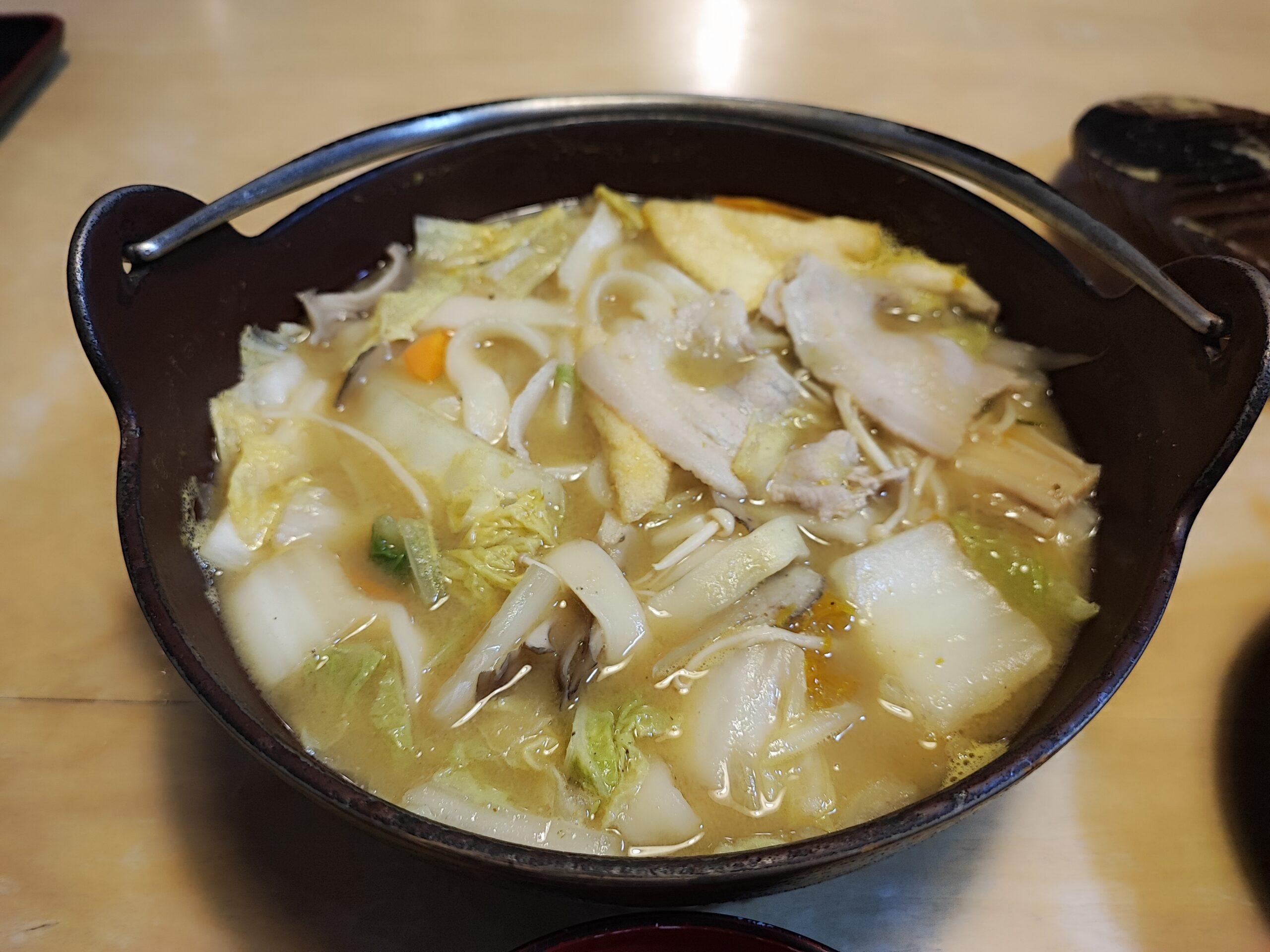
People call it “the hardest udon in Japan,” and honestly that’s not really an exaggeration. The noodles are thick, kind of square in cross-section instead of round, twisted a bit from being hand-cut. Eating a bowl properly feels less like a meal and more like a light workout for your jaw. But there’s a real reason it ended up this way, and it’s a better story than “some chef somewhere decided to make things difficult.”
Back in the early 1900s, Fujiyoshida basically ran on silk. Something like more than half the households in the Shimoyoshida area were in the weaving business, and the actual weaving — sitting at the loom, running the machine — was women’s work. It was skilled, fast, and constant, and if the woman of the house had to stop and go cook lunch, the loom sat idle, which meant money not getting made. So lunch duty fell to the men instead, who were usually off selling or trading the finished cloth rather than weaving it themselves. There’s also a smaller, more practical piece to this: kneading dough and doing water work roughs up your hands, and nobody wanted the women’s hands getting cracked or calloused before they went back to handling delicate silk thread.
So you had men — not cooks, not trained in any of this — making the family lunch. And a guy with strong arms who isn’t worried about technique is going to knead the hell out of that dough. No gentle folding. No finesse. Just brute force, because the point wasn’t elegance, it was making something that would actually keep a person full through a hard afternoon of physical work. What came out the other end was dense, chewy, and stubbornly resistant to your teeth. That’s not an accident. That was the whole assignment.
There’s a second story tangled up in this one too, and I like it better honestly. Fujiyoshida was also a major staging point for Fuji-ko, the Edo-period pilgrimage groups who’d climb Mount Fuji as a religious act. Before setting off up the mountain, pilgrims were apparently served something called yumori udon — plain white noodles just sitting in their own clear cooking water, completely unseasoned, eaten as a kind of purification before the climb. A few food historians think that ritual noodle tradition got folded into what eventually became Yoshida Udon.
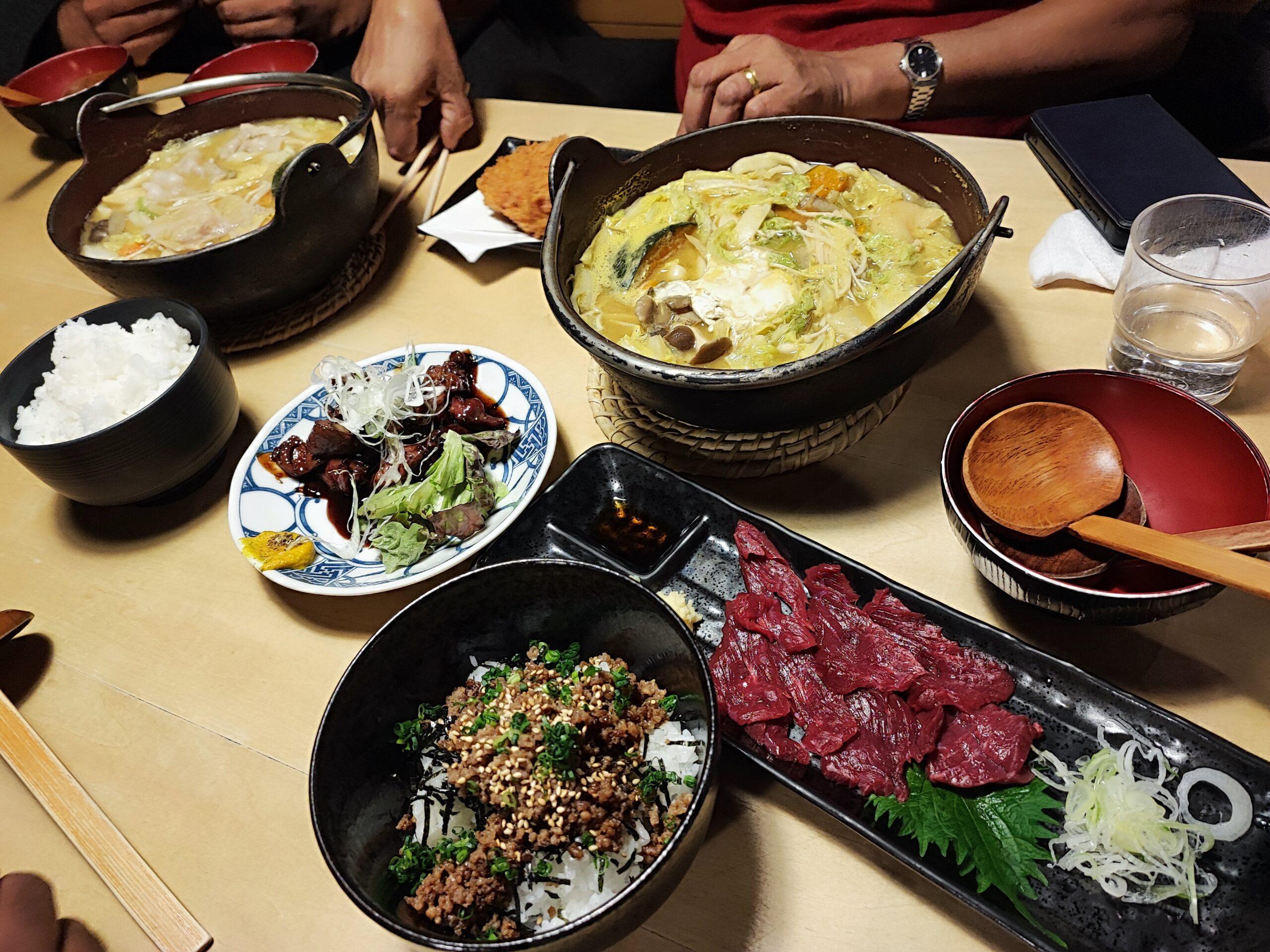
As for what actually lands in front of you: thick, squared-off, slightly twisted noodles in a broth that’s usually soy and miso blended together, though every shop (and every household, honestly) does its own version — some lean more into fish stock, some go heavier on mushroom. Boiled cabbage is basically mandatory on top, partly because cabbage was one of the few vegetables that grew reliably here, and partly because the crunch actually works with the noodle texture in a way I didn’t expect the first time. Then there’s horse meat, simmered until sweet and a little savory — the classic topping, though a lot of places have quietly switched to pork over the years.
The thing that actually runs the show at the table, though, is suridane. It’s a chili condiment, usually red chili and sesame and sansho pepper fried up in oil, and every shop has their own slightly different version sitting in a jar on the counter. Add it slowly. I did not add it slowly my first time and regretted it within about four bites.
One more thing worth knowing, mostly because nobody tells you this until you’ve already lived here a while: because the noodles are white and long, they’ve traditionally symbolized long life, so Yoshida Udon shows up at weddings, New Year’s, basically any occasion where people gather to celebrate something. There’s an old saying around here that you don’t really finish a proper gathering until udon’s been served.
If it’s your first time trying it — get it hot, not cold. The heat softens things just enough that the chew feels approachable instead of like a challenge. Actually chew, don’t rush it, and build the suridane up gradually rather than dumping the whole spoonful in at once. And don’t be thrown off if the bowl looks almost sparse compared to what you’re used to. A few of these noodles go further than you’d think.
New articles
-
 Basashi: Why Landlocked Mountain Country Ended Up Eating Raw Horse (Blame the Pilgrims)
-
Mount Fuji Has Its Own Secret Bear Population — And Scientists Are Still Figuring It Out
-
Why Is the Weather Around Mt. Fuji So Unpredictable in August? Kawaguchiko Weather
-
The Hoto Noodle That Warlords Definitely Didn’t Invent (But Everyone Believes They Did)
-
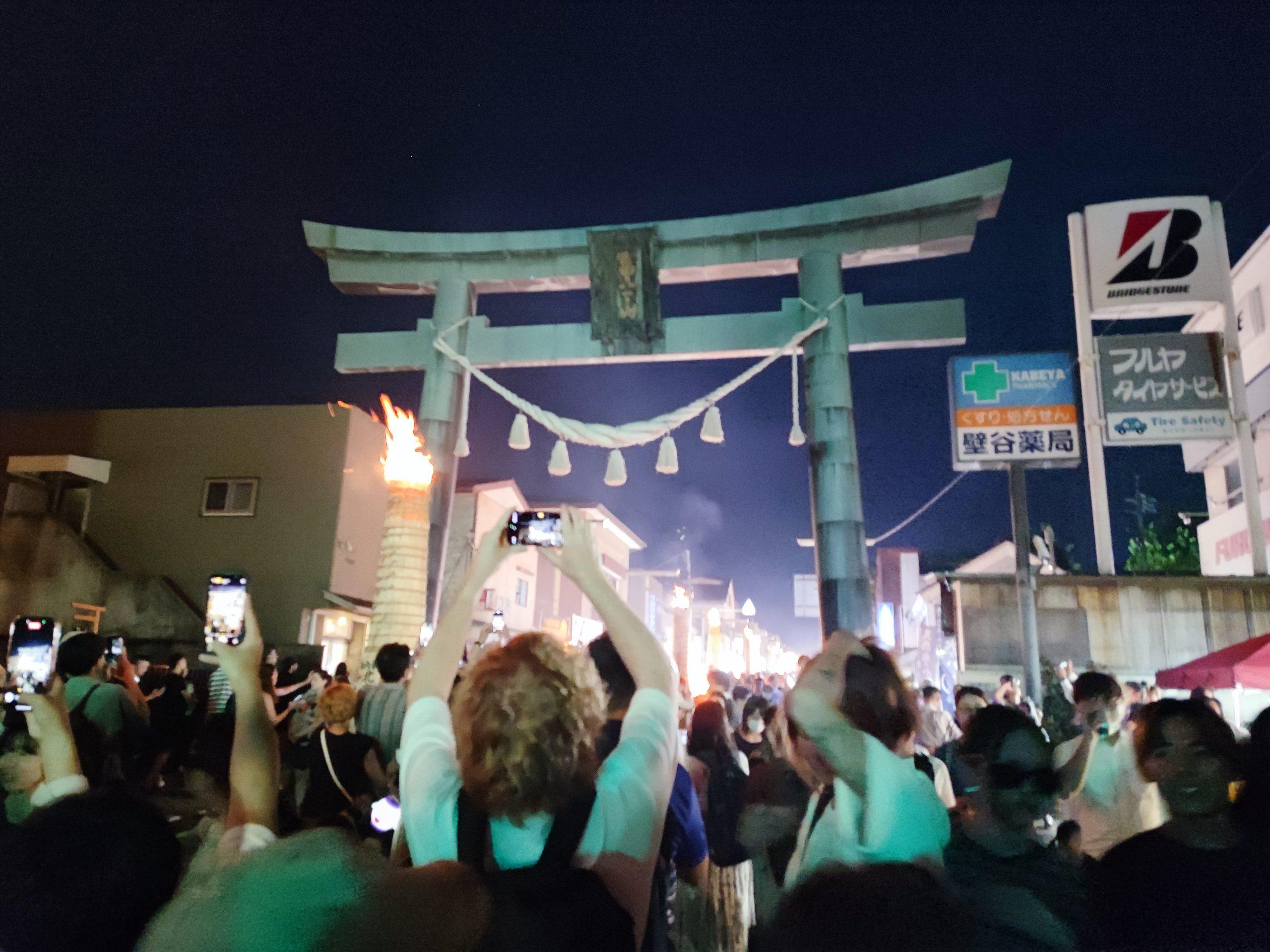
Yoshida Himatsuri Fire Festival/Ceremony: Why You Should Visit Mt Fuji’s Fujiyoshida This Week | Aug 26 and 27, 2026