Basashi: Why Landlocked Mountain Country Ended Up Eating Raw Horse (Blame the Pilgrims)

- Explore around the Mt. Fuji area
- Led in English by a local Japanese
- Details Here
Here’s something that tends to confuse people when they first visit Yamanashi: someone will tell you to try the horse sashimi.
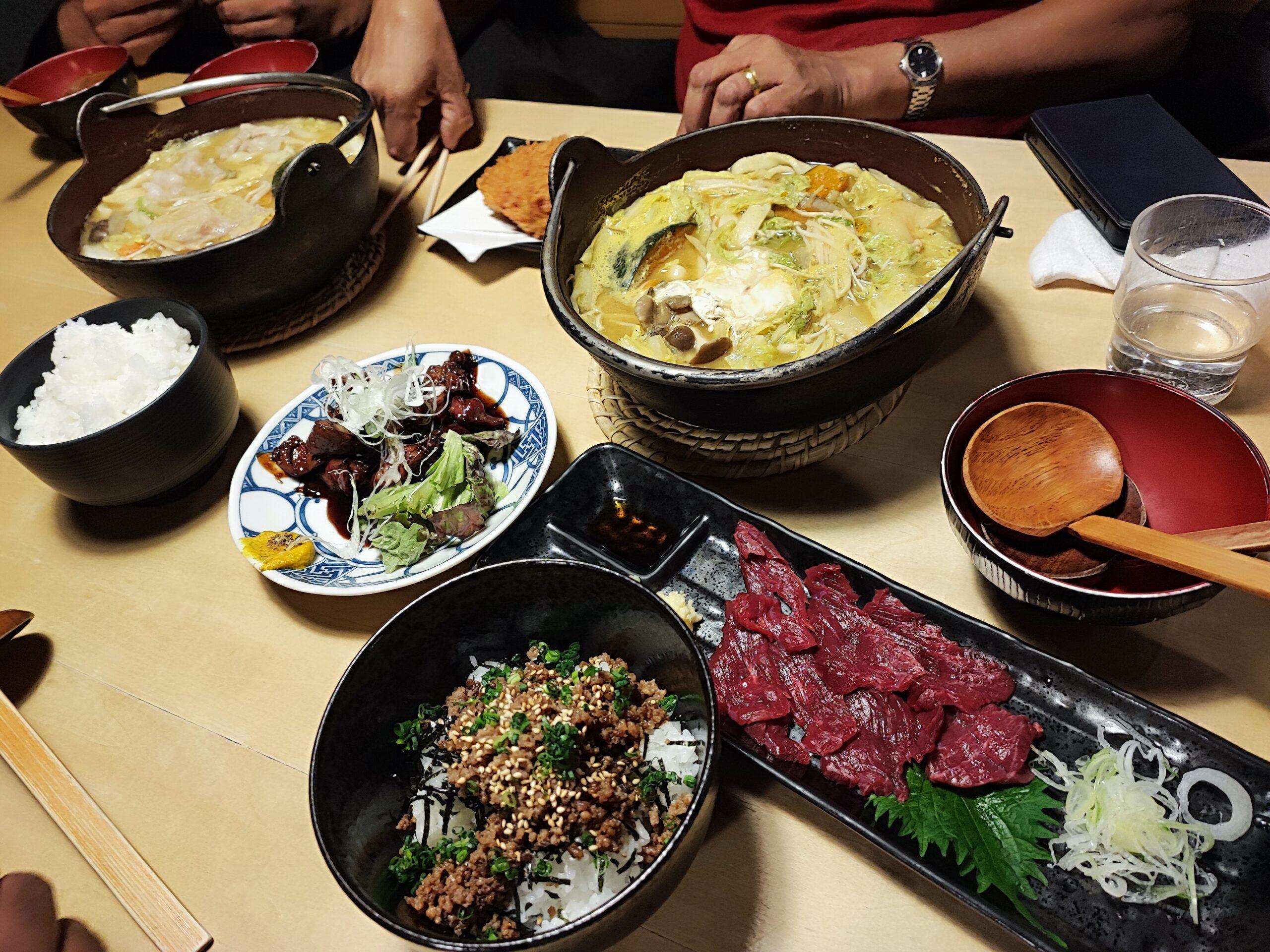
Basashi is thinly sliced raw horse meat, usually eaten with soy sauce and things like ginger, garlic, or scallions. Around here, it’s not some unusual food that people order just to shock tourists. It’s a local specialty, alongside hoto and Yoshida Udon.
The first reaction I usually hear is something like, “Wait, horse?” followed fairly quickly by, “Isn’t basashi from Kumamoto?”
Well, yes. Kumamoto is probably the place most people in Japan associate with it. But Yamanashi has a long history with horses too, and there’s a pretty good reason for that.
Go back more than a thousand years and the area was known as Kai Province. Under Japan’s old ritsuryo system, Kai was known for producing horses, including the famous Kai Kurokoma, or black horses. Good horses from the region were sent toward the capital and were valued by the people who could afford them.
So horses have been part of the identity of this area for a very long time. The connection to eating horse meat came later.
Mount Fuji played a part in that as well. During the period when Fuji-ko pilgrimages became popular, people came from across the Kanto region to climb the mountain as an act of religious devotion. Horses were an important part of life around the mountain. They carried supplies and goods and were used by people moving through the region.
With horses everywhere, horse meat was not some completely foreign ingredient. Over time, it became part of the local food culture.
There’s another little detail that makes basashi fun to talk about. Horse meat is often called sakura-niku, or “cherry blossom meat.”
Nobody seems to have a single explanation for the name.
One theory is simply the color. Fresh horse meat has a reddish-pink color that can look a little like cherry blossoms. Another explanation goes back to the Edo period, when people sometimes used flower names as nicknames for meats because eating certain four-legged animals was discouraged by Buddhist-influenced customs.
Wild boar became botan, meaning peony. Venison became momiji, meaning maple leaf. Horse became sakura.
Then there are other stories, including one involving Sakamoto Ryoma and a drinking song about tying up a horse near cherry blossoms. I wouldn’t put too much weight on any one explanation. There are several versions, and none seems to have completely won the argument.
As for the actual food, there’s not much to it.
The meat is sliced very thin and served raw, usually with a soy-based dipping sauce and some combination of ginger, garlic, or scallions. The texture is soft and almost silky. There’s also a slight sweetness to it, especially from the fat.
If you’re expecting something with the strong flavor of beef or the richness of pork, basashi is quite different. It’s lighter than you might expect, which is probably why people who are initially nervous about eating raw horse meat sometimes end up liking it.
Horse meat is also known for being relatively high in protein and iron and lower in fat than many other meats, although obviously that doesn’t turn a plate of basashi into health food.
And there’s another connection that I like even more.
Horse meat also appears in Yoshida Udon. Instead of being served raw, it’s cooked into a sweet and savory topping that goes over the noodles.
Same ingredient, completely different experience.
That’s probably the easiest way to understand how ordinary horse meat is in this part of Yamanashi. Basashi might look like the adventurous choice on a menu, but the same meat can also turn up in a bowl of everyday local noodles.
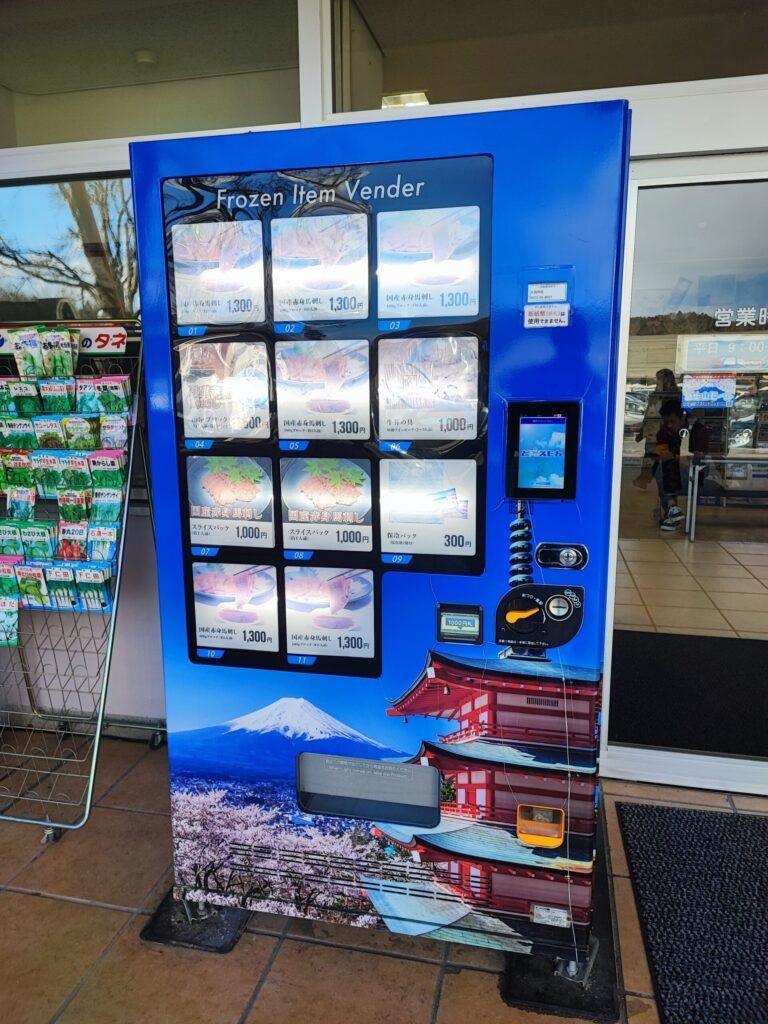
And if you happen to walk past one of the horse-meat vending machines around the Fuji area, don’t be too surprised.
Yes, you can actually buy basashi from a vending machine.
New articles
-
 Basashi: Why Landlocked Mountain Country Ended Up Eating Raw Horse (Blame the Pilgrims)
 -
Mount Fuji Has Its Own Secret Bear Population — And Scientists Are Still Figuring It Out
-
Why Is the Weather Around Mt. Fuji So Unpredictable in August? Kawaguchiko Weather
-
The Hoto Noodle That Warlords Definitely Didn’t Invent (But Everyone Believes They Did)
-
Yoshida Himatsuri Fire Festival/Ceremony: Why You Should Visit Mt Fuji’s Fujiyoshida This Week | Aug 26 and 27, 2026