Why Fujiyoshida Sets Itself on Fire Every August (And Why It’s One of Japan’s Strangest Festivals)


- Explore around the Mt. Fuji area
- Led in English by a local Japanese
- Details Here
If you’re anywhere near Kawaguchiko this week, you’re about to see something that looks less like a festival and more like a small city deciding to burn itself down on purpose.
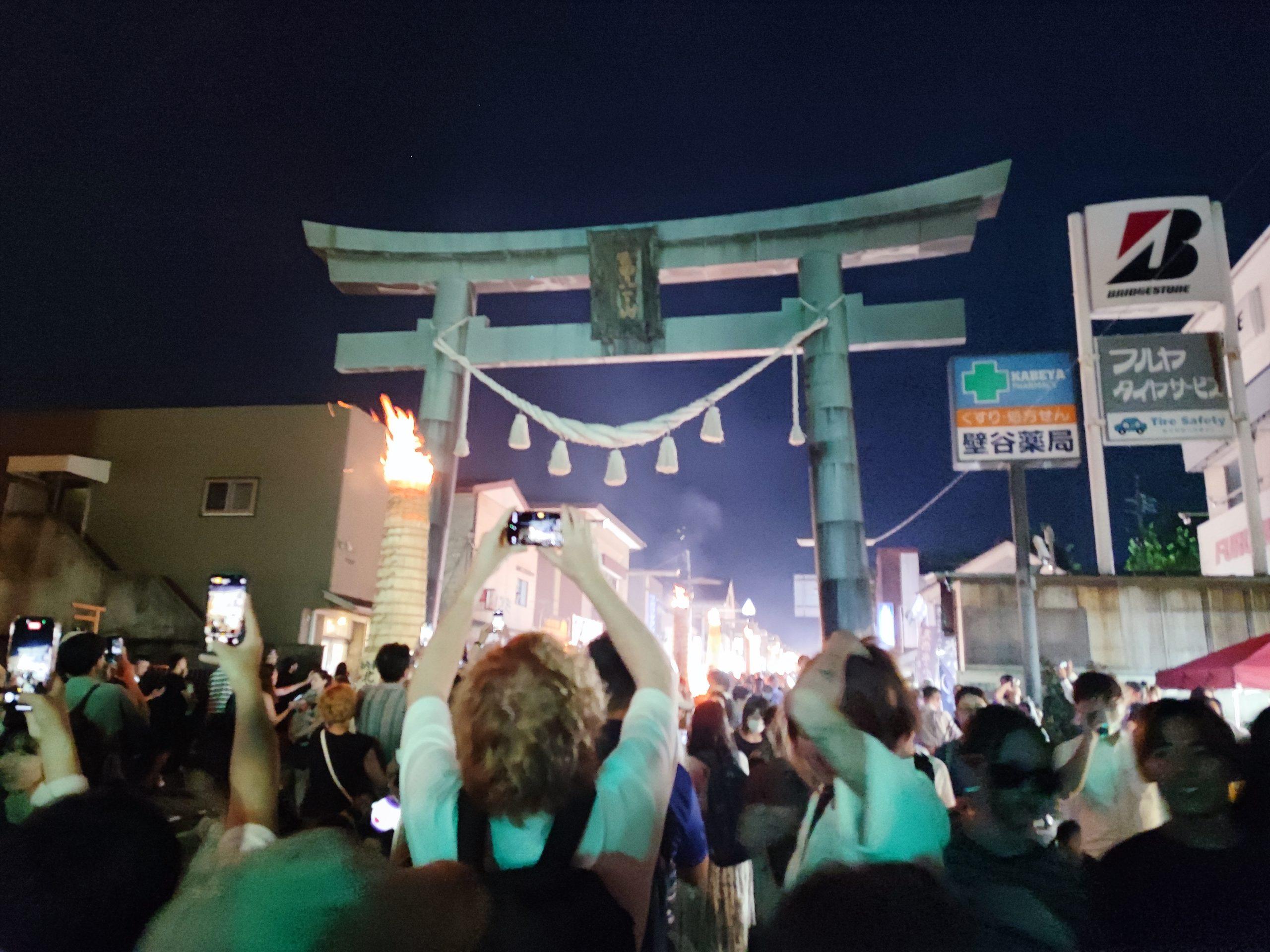
On August 26th and 27th, Fujiyoshida holds the Yoshida Fire Festival — Yoshida no Himatsuri — one of Japan’s “three great strange festivals.” I’ve seen it many times, and the first thing that always gets me is the scale of the fire.
On the 26th, more than 70 giant torches, each about 3 meters tall and shaped like giant bamboo shoots, are lit along roughly a kilometer of the old main street, from the Kanadorii torii gate toward Kitaguchi Hongu Fuji Sengen Shrine. Many households along the route also put smaller piles of logs outside their homes and light those as well.
Once the fires are going, Kamiyoshida looks completely different. The sky turns orange and you can feel the heat from surprisingly far away. Up on Mount Fuji, the mountain huts along the Yoshida Trail light their own torches around the same time, so for a while the mountain and the town seem to burn together.
The next day is much quieter.
August 27th is Susuki Matsuri, or the Pampas Grass Festival. Two portable shrines are carried back through town, while worshippers carry stalks of susuki grass and circle a sacred enclosure called Takamagahara. The whole thing has a very different atmosphere from the night before.
There’s also a bit of disagreement about where the fire tradition actually came from.
The explanation most visitors hear connects it with Konohanasakuya-hime, the shrine’s principal deity and the goddess associated with Mount Fuji. In the old myth, she’s accused by her husband of infidelity. To prove her innocence, she shuts herself inside a windowless birthing hut, sets it on fire, and gives birth to three children unharmed in the flames.
That’s one reason the festival’s fire is sometimes explained as a chinka-sai, a ritual intended to prevent or suppress volcanic eruptions.
The problem is that the older records don’t make the connection quite so neatly.
According to the shrine’s own priests, the fire tradition may originally have belonged to Suwa Shrine, the smaller shrine on the same grounds, which is dedicated to a different deity. An Edo-period regional gazetteer describes the event as Suwa Shrine’s summer festival and mentions bonfires being lit throughout the town as an offering to the local guardian deity. It doesn’t mention Konohanasakuya-hime at all.
One shrine official has even questioned whether the fire-goddess explanation really fits the historical evidence. It’s still the explanation you’ll hear most often, though.
There is another reason the festival falls at this time of year. It marks yamajimai, the symbolic end of the Mount Fuji climbing season.
That makes a certain amount of sense when you see the festival in person. The climbing season is coming to an end, the torches go up, and the town spends one night surrounded by fire.
The date itself is relatively recent, at least in its current form. The festival used to follow the old lunar calendar, so the date moved around from year to year, sometimes falling anywhere from roughly mid-August to early September. The August 26–27 dates were fixed in the early 1900s after Japan adopted the modern calendar.
One thing visitors sometimes ask about is how the town manages to have this many fires burning without everything going up in flames. Apparently, there isn’t a recorded case of the festival’s torches causing a major fire in the town, even in years when the weather hasn’t been ideal. Locals also point to the pine wood used for the torches, which burns well even when it’s damp.
The people who run the festival are local residents, too. Fourteen married men under 42 from the shrine’s parish are selected each year to take responsibility for organizing it. It’s considered an important role, and there’s a local saying that a Yoshida man isn’t fully grown until he’s served as a festival steward.
That’s probably one of the things I like most about the festival.
For most of the year, Fujiyoshida can feel like a town people pass through on their way to Mount Fuji. They get off the train, take some photos, head toward the mountain and move on.
For these two days, that’s completely reversed.
The town itself becomes the destination.
The 26th is the night I’d recommend if you want the big spectacle. Standing along the old main street with the torches burning on both sides is hard to forget.
But if you have another day, stay for the 27th. Susuki Matsuri is slower and more solemn, and you get a different look at the traditions that connect this town to Mount Fuji.
One practical thing: traffic restrictions around the shrine and main street are extensive on both days. Public transportation is much easier. Take the Fujikyu Railway to Fujisan Station, then walk or use the festival shuttle. Once the roads close, trying to drive into the area is more trouble than it’s worth.
New articles
-
 Yoshida Himatsuri Fire Festival/Ceremony: Why You Should Visit Mt Fuji’s Fujiyoshida This Week | Aug 26 and 27, 2026
 -
Mount Fuji’s Forgotten Base-to-Summit Trail Is Finally Getting Some Love
-
Why Mount Fuji’s Rescue Bill Has Become Japan’s Most Heated Mountain Debate
-
Why Fujiyoshida Sets Itself on Fire Every August (And Why It’s One of Japan’s Strangest Festivals)
-
Yoshida Udon: The Noodle That Made Me Question My Jaw Strength