Which of the Fuji Five Lakes Is Best for Mt. Fuji Views? A Local’s Honest Ranking (2026)

Hi! It’s Daichi from KOKO Journey.
If you’re planning to visit the Fuji Five Lakes (Fujigoko area) around Mt. Fuji, you’ve probably noticed something: there isn’t just one lake with a view of Mount Fuji — there are five.
And they’re all different!
Some are lively and easy to access. Some are quiet and peaceful. Some are dramatic and wild. So naturally, the big question is:
With five different lakes to choose from, where should you go?
As a local, I’ve visited these lakes more times than I can count. Based on that experience, here’s my honest 2026 ranking of the Mt. Fuji area’s Five Lakes.
What are the Fuji Five Lakes (Fujigoko/富士五湖)?
Before we dive into the ranking, let’s quickly introduce the five lakes located at the northern base of Mt. Fuji in Yamanashi Prefecture.
Here are the Fuji Five Lakes (Fujigoko/富士五湖)
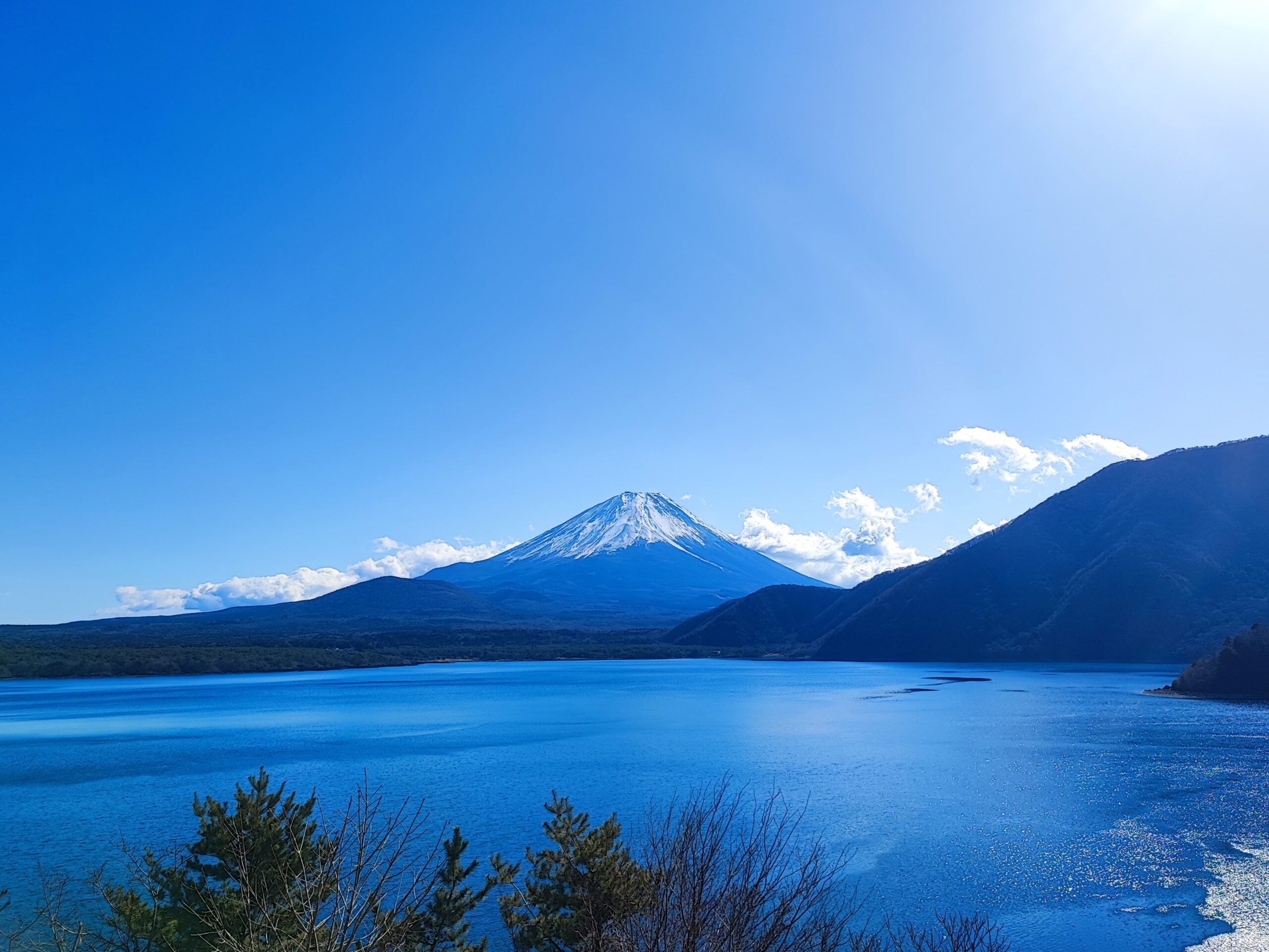
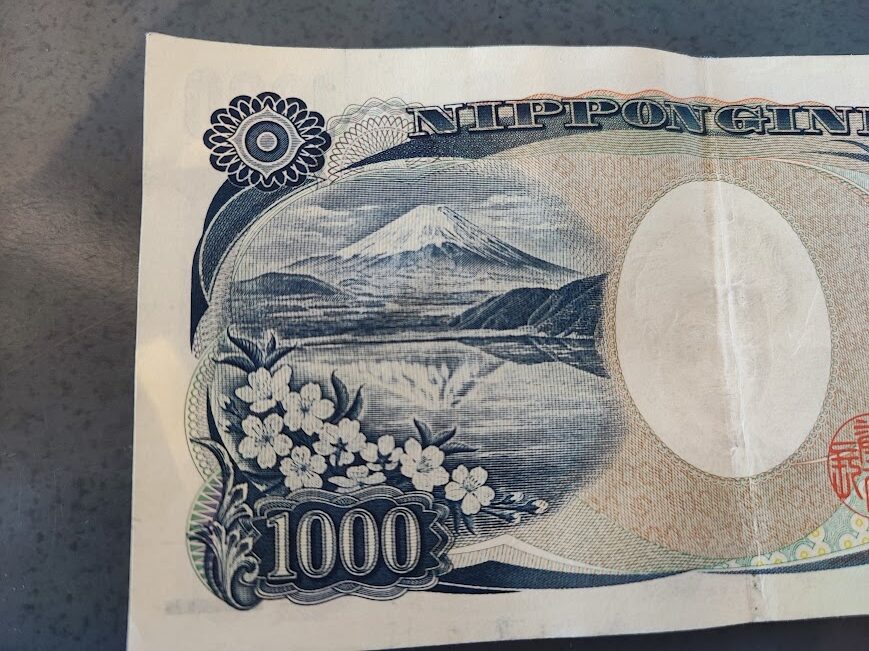
- Lake Motosu (Motosuko/本栖湖): The deepest, famous for its appearance on Japanese currency 1,000 YEN.
- Lake Shoji (Shojiko/精進湖): The smallest and most tranquil with a famous bench in Japanese Drama “Hot Spot” (You can see it on Netflix).
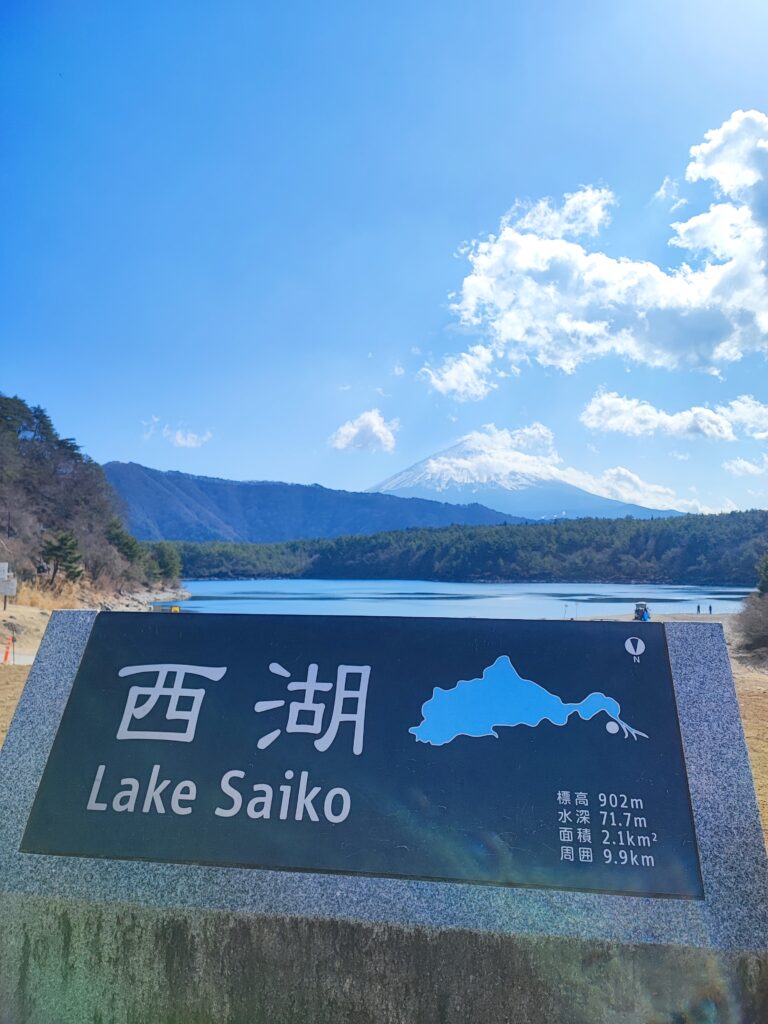
- Lake Saiko (Saiko/西湖): Surrounded by the Aokigahara Forest.
- Lake Kawaguchi (Kawaguchiko/河口湖): The most popular and accessible.
- Lake Yamanaka (Yamanakako/山中湖): The largest and highest in altitude.
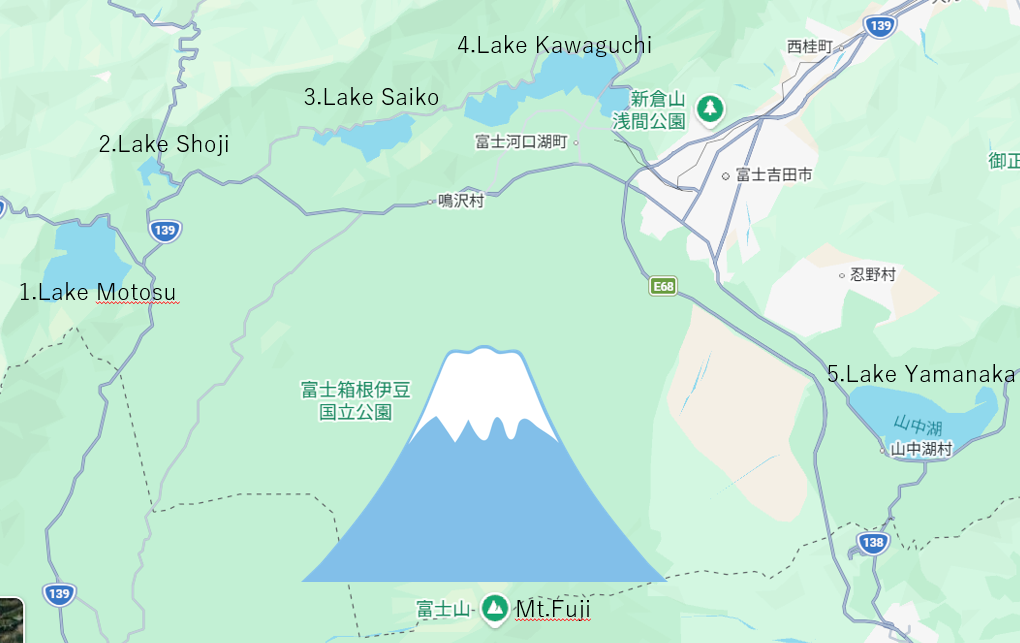
You can quickly check where the Fuji Five Lakes are located on the map below!

The Fuji Five Lakes, One by One
Now, let’s take a closer look at all five lakes — and see which one speaks to you.
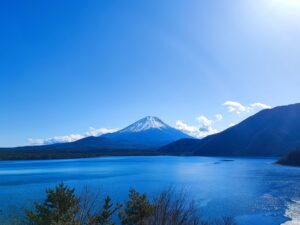
1. Lake Motosu (Motosuko/本栖湖) – The Famous “1,000 Yen” View


Lake Motosu (Motosuko) is the most remote of the five lakes from Kawaguchiko Town.
The view from the northwestern shore is the exact one featured on the back of the the previous-generation 1,000-yen bill. The water is incredibly clear and deep blue. I’d say it has the clearest water of all five lakes.
2. Lake Shoji (Shojiko/精進湖) – Relaxing Vibes
Small, Chill, and Unique.

Lake Shoji (Shojiko) is the smallest of the five lakes, but don’t underestimate it. Because of its size, the atmosphere feels intimate and it can feel almost private.
Shojiko is also known for a famous lakeside bench that appeared in the popular Japanese drama
Hot Spot (You can see it on Netflix). Fans of the show visit just to sit on that bench and take in the same view. It has become a small but charming photo spot.
From here, you can also see “Kodaki Fuji (子抱富士),” where Mount Fuji appears to cradle a smaller mountain in front of it, creating a unique layered composition.
3. Lake Saiko (Saiko/西湖) – A Camper’s Lake


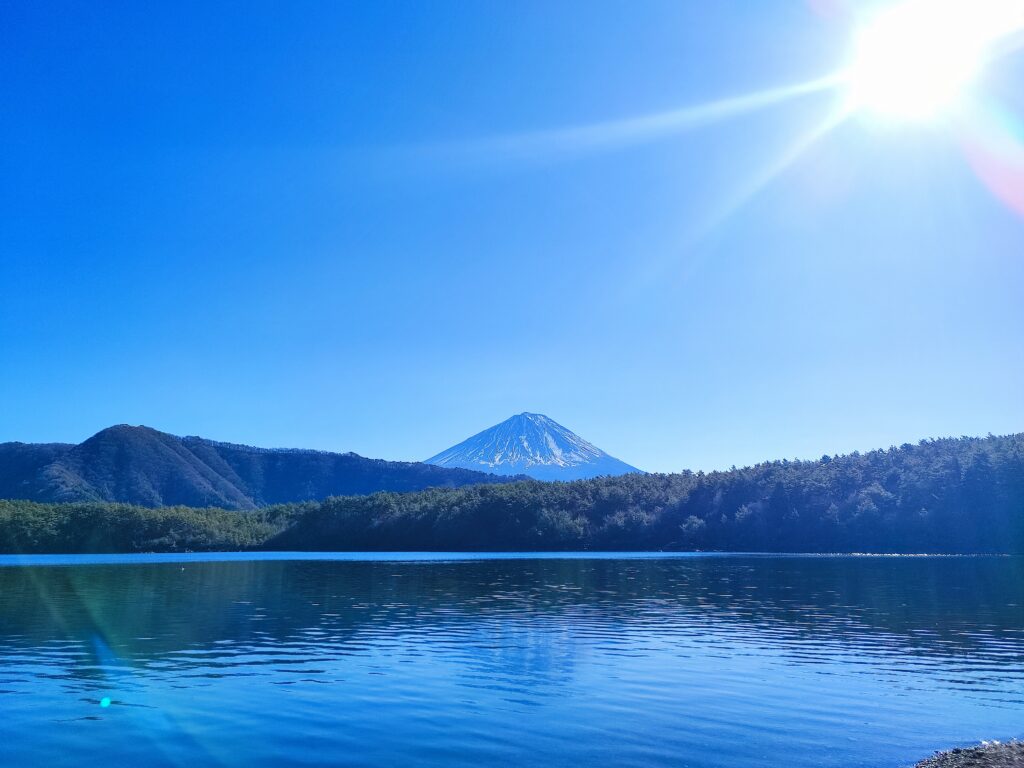
Lake Saiko (Saiko) has fewer open viewpoints compared to the other lakes, and Mount Fuji is partially hidden by surrounding hills and trees.
However, Saiko has a different kind of appeal. It’s especially popular among campers and outdoor lovers. The atmosphere is forested and a bit wild, closely connected to Aokigahara Forest.
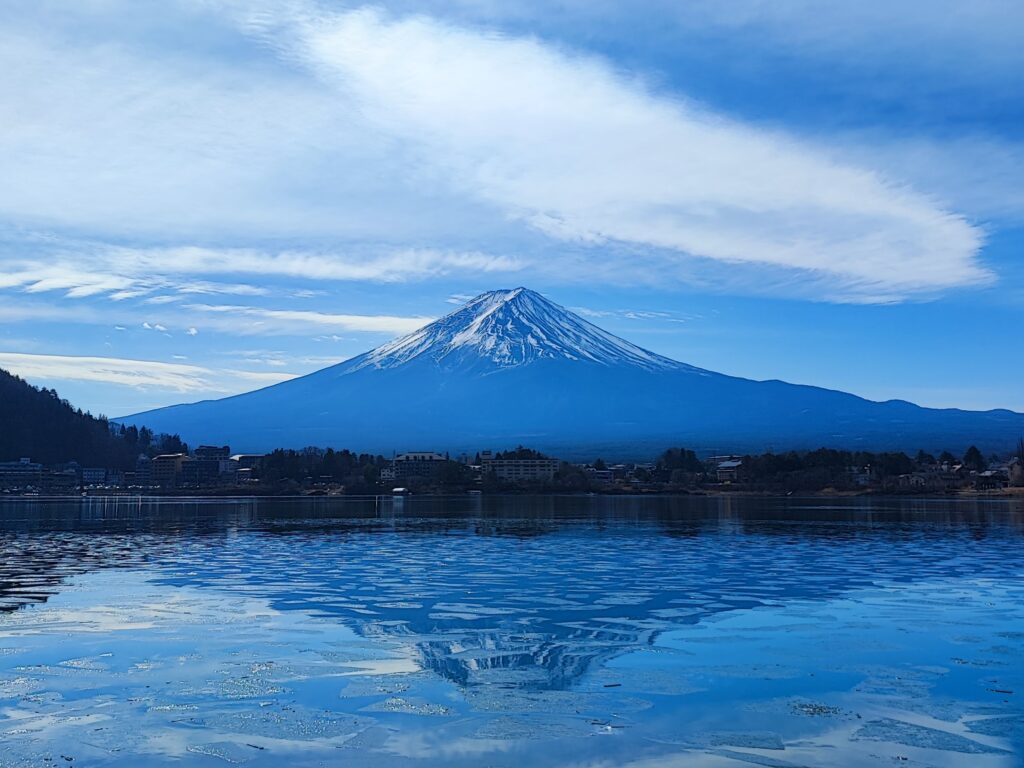
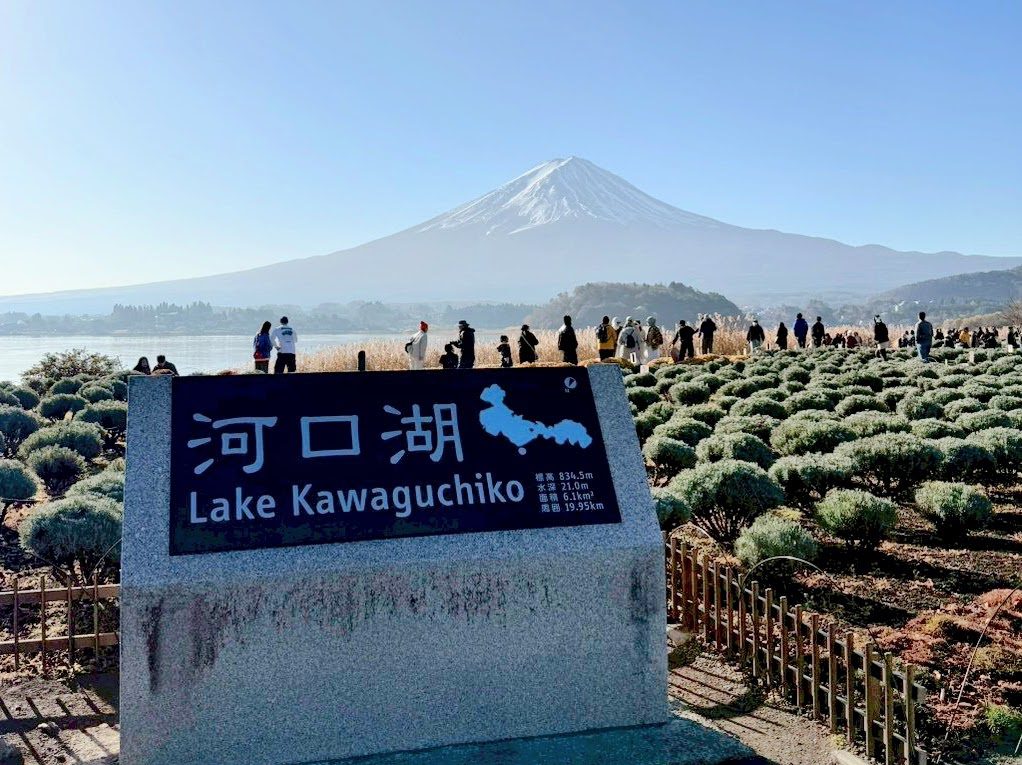
4. Lake Kawaguchi (Kawaguchiko/河口湖) – Most Popular and Great Access


Lake Kawaguchi (Kawaguchiko) is the easiest to reach by bus or train from hotels in Kawaguchiko/Fujiyoshida.
The area is well-developed, with cafés, shops, and walking paths, making it very convenient for first-time visitors.
Because of that convenience, it can get quite busy during peak hours, especially after mid-morning. So arriving early makes a big difference.

5. Lake Yamanaka (Yamanakako) – My Personal Favorite!


As the largest of the five lakes, Lake Yamanaka (Yamanakako) offers a wide, open perspective of Mount Fuji. Because of its size, the scenery feels expansive and airy, with big skies and a strong sense of scale.
Lake Yamanaka is actually my personal favorite. There’s something about the openness here — the wide horizon, the wind across the lake, the feeling of breathing room — that makes Fuji feel even more powerful and majestic.
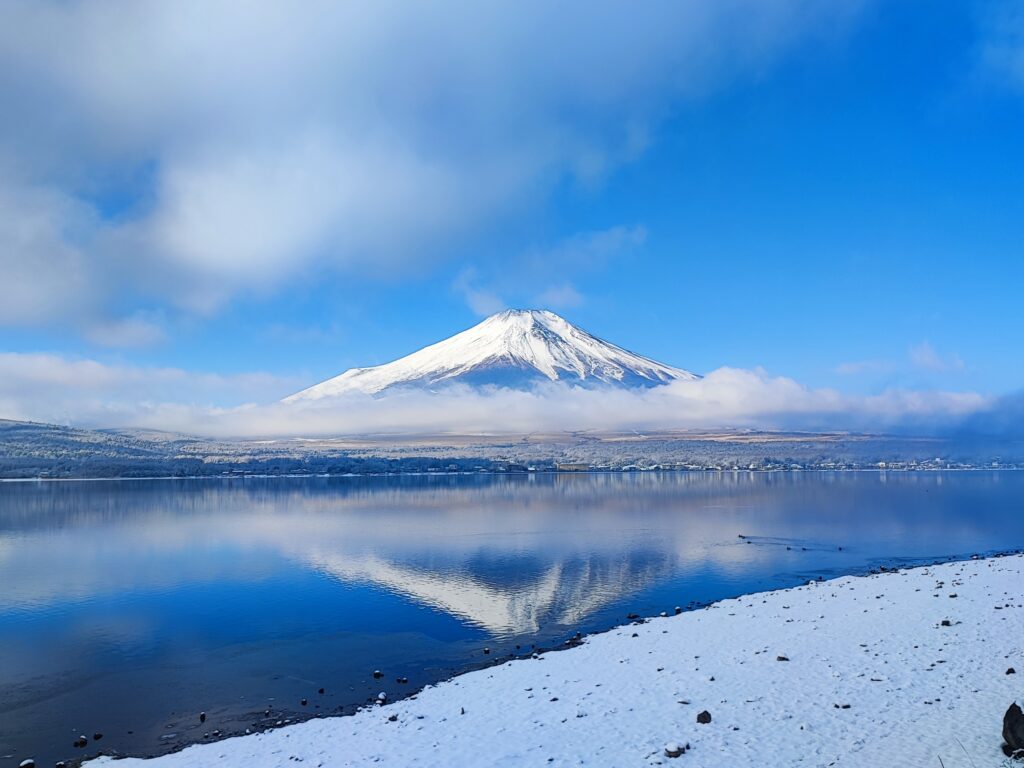
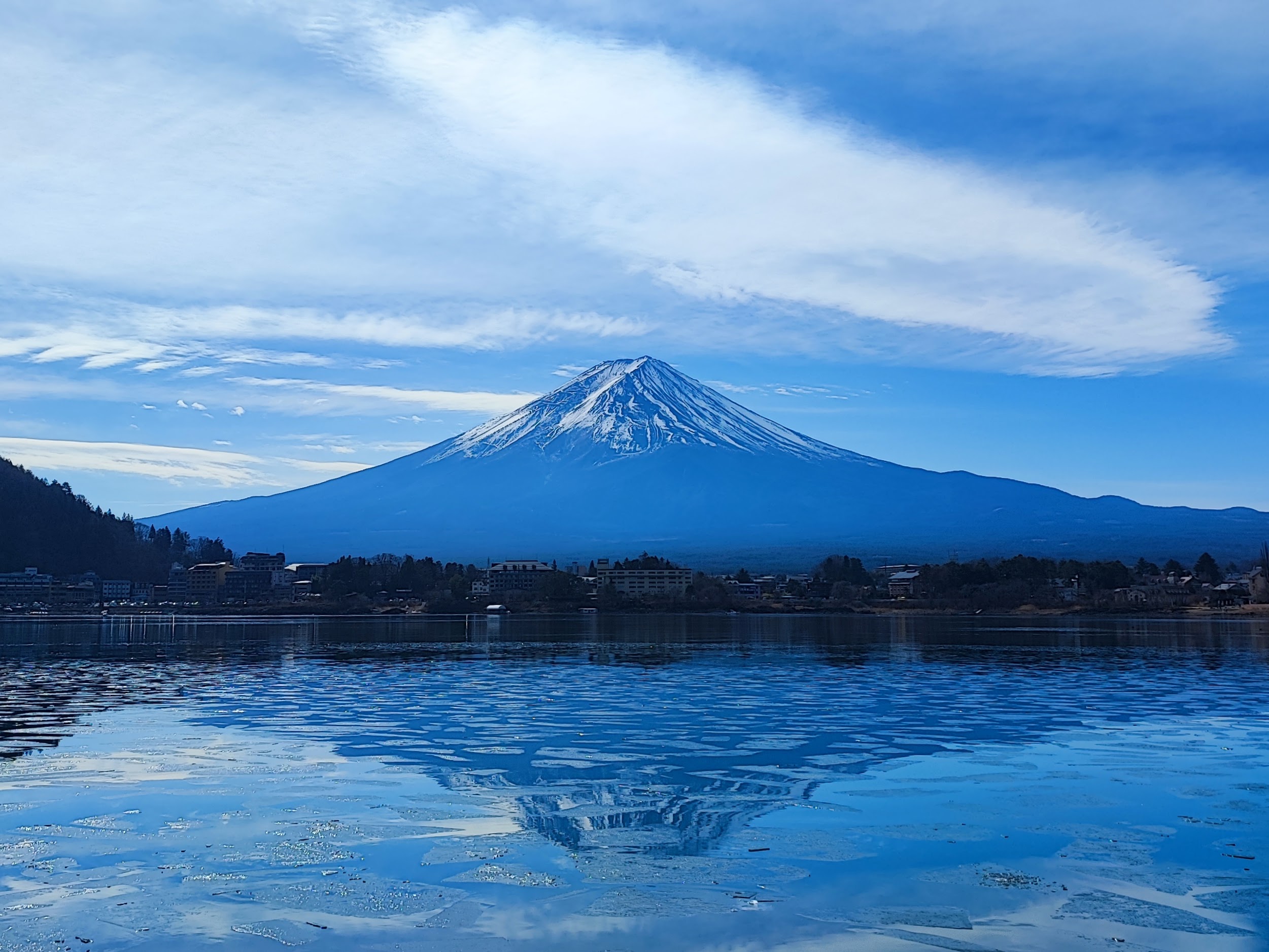
If you want to see Mt. Fuji reflected on the lake
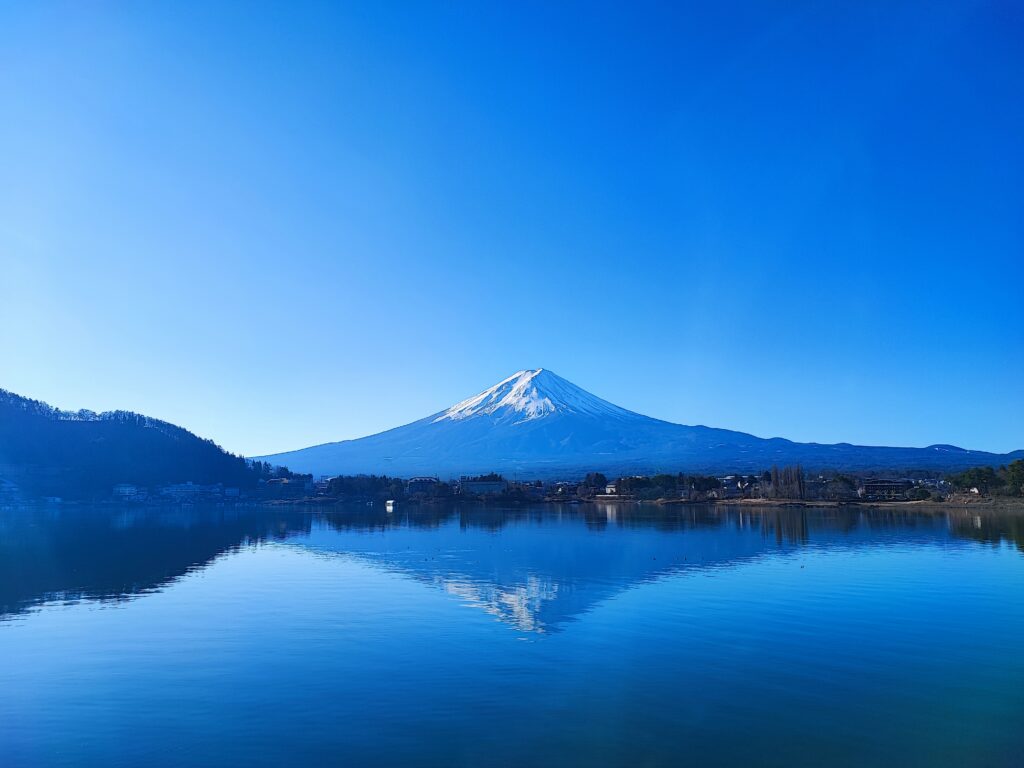
To see the “Mirror Fuji,” you need three things: Clear sky, no wind, and an early start.
- Clear skies →Mt.Fuji must be visible.
- Little to no wind (ideally under 2–3 m/s) → Since even a light breeze can create ripples and break the reflection.
- Go early → around 6–8 AM gives you the best chance, as mornings tend to be calmer.
Mornings tend to be calmer, especially after a stable, clear night. That’s when the lake surface is most likely to turn into glass.
Of course, beautiful reflections can still happen later in the day if the wind stays quiet, but if you want to increase your odds, set that early alarm.
So… Which Lake Should You Actually Choose?
If you’re visiting the Fuji Five Lakes area, chances are you’ll be staying in either Kawaguchiko or Fujiyoshida. That’s where most hotels and transport connections are.
The easiest and most convenient option is Lake Kawaguchi (Kawaguchiko).
It’s the most accessible by train and bus, and it has the most restaurants, cafés, and attractions. It’s popular for a reason — the views are fantastic and everything is easy. If it’s your first time in the area, Kawaguchiko is a very safe and solid choice.
If you have a bit more time and want something slightly less crowded, I recommend heading to Lake Yamanaka (Yamanakako).
It’s about 20–30 minutes further by car, but the atmosphere is more open and relaxed. The scale feels bigger, the skies feel wider, and you’ll usually find more breathing space compared to Kawaguchiko.
And if you’re the type of traveler who prefers quiet over convenience, Lake Motosu (Motosuko) is incredibly peaceful.
But here’s the honest truth.
Choosing between the Fuji Five Lakes is actually harder than it sounds, because every single one has something special. There really isn’t a “bad” lake in the Fuji Five Lakes.
Each one offers a different angle of Mount Fuji, a different atmosphere, and a different pace. In the end, it’s less about which lake is “best” and more about what kind of experience you want that day.
You can’t go wrong! You’re still standing in front of Fuji.


Comments