Narusawa Ice Cave and Fugaku Wind Cave: Two Lava Caves near Mt. Fuji

Hi, it’s Daichi from KOKO Journey.
Today, let me introduce two caves Narusawa Ice Cave and Fugaku Wind Cave near Mt. Fuji. Both are lava caves in Aokigahara Forest, and both were formed by Mt. Fuji’s volcanic activity, but they feel different once you step inside. They are also both designated as natural monuments, which shows how important they are geologically and culturally.
Narusawa Ice Cave: compact, cold, and adventurous
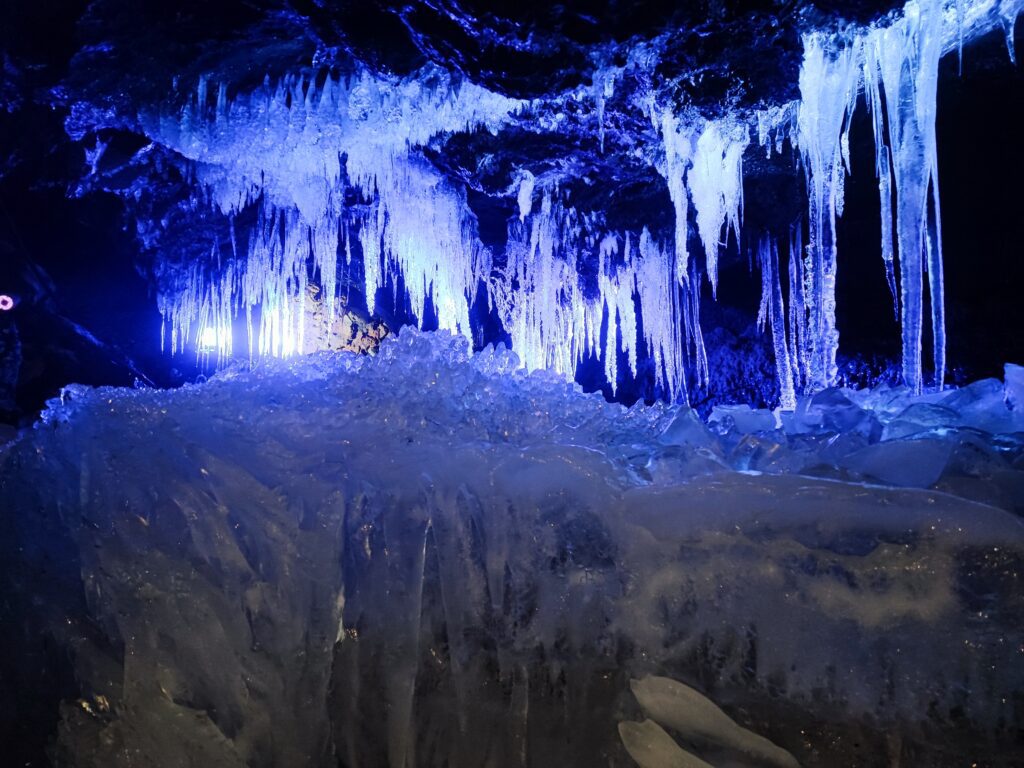
Ice Cave!
@kokojourney3776 Narusawa Ice Cave 3 degrees all year round.. even in the summer #icecave #mtfuji #aokigahara #narusawa #kokojourney ♬ アカシア – BUMP OF CHICKEN
Narusawa Ice Cave is the one I recommend to travelers who are looking for a little more adventure. The cave is a vertical-style lava cave with a total length of about 153 meters.
The inside is narrow and there are small ups and downs. Visitors can experience it almost like a small underground adventure.
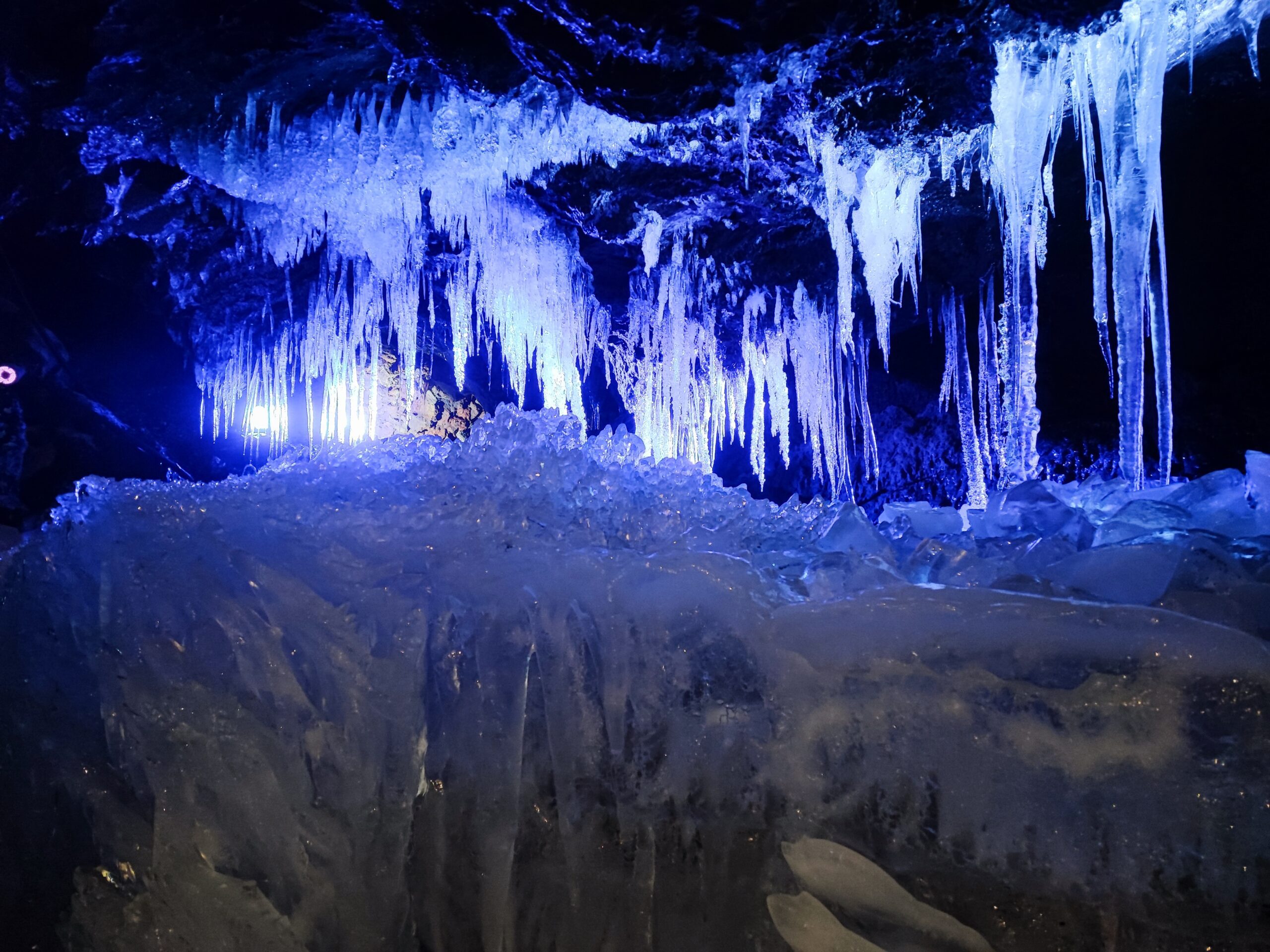
One of its biggest attractions is the cold. The cave stays at around 3℃ year-round, and natural ice pillars can be seen even during the summer.
Narusawa Ice Cave also has a strong historical background. It was formed by the lava flow from Mt. Fuji’s 864 eruption, and later recognized as a natural monument in 1929. In other words, this is not just a cool sightseeing spot; it is a place where volcanic history and Japanese natural heritage meet.
3 key features of Ice Cave
- Narrow and adventurous to explore.
- Naturally 3℃ year-round (0~3℃), with visible ice pillars.
- Formed by Mt. Fuji’s 864 eruption and later protected as a natural monument.
Fugaku Wind Cave: calm, echo-free, and tied to sericulture
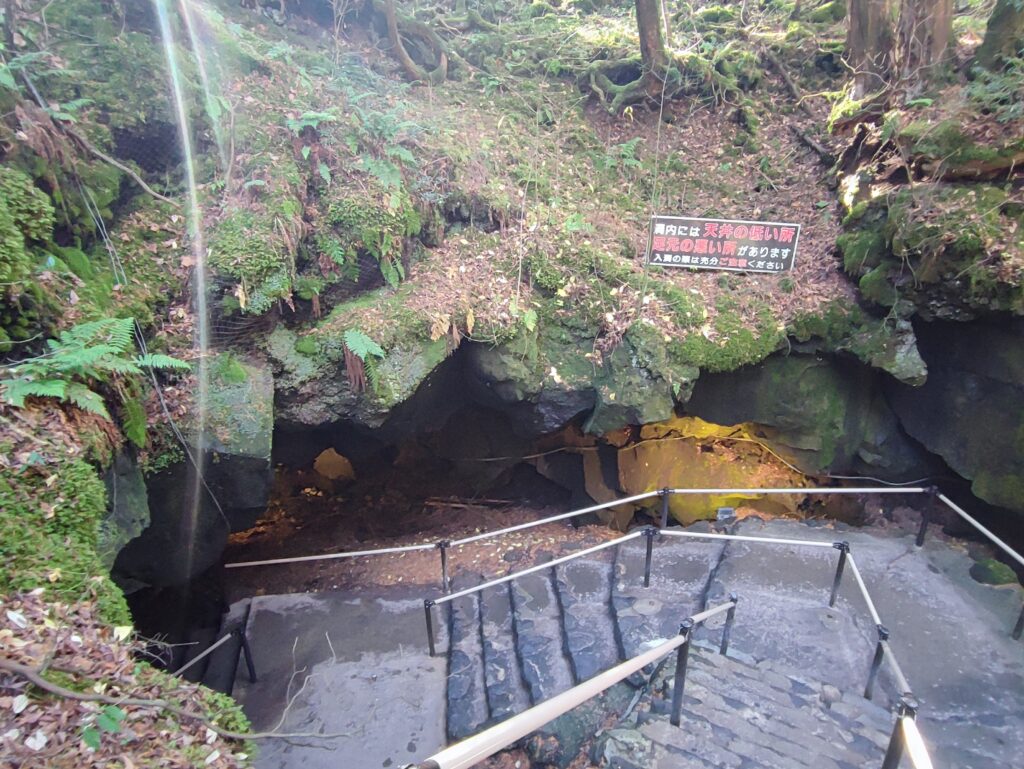
Fugaku Wind Cave offers a different mood. Compared with Narusawa Ice Cave, it is a horizontal lava cave measuring 201 meters in total length and 8.7 meters in height. With a flatter route, it is easier to walk through and suits a wider range of visitors.
It is also cold inside, with an average temperature of around 3 ℃, but what makes it especially interesting is the atmosphere. The cave is known for its lack of echo because the basalt walls absorb sound, creating a quiet, almost meditative feeling. Along the way, visitors can also see lava shelves, rope-like lava, tree-shaped lava molds, and other volcanic formations.
Historically, Fugaku Wind Cave was used as a natural refrigerator. It was used to store silkworm eggs and seeds, and this was important for local agriculture and sericulture before modern refrigeration existed. The cave was also formally designated as a natural monument in 1929, which adds another layer to its historical value.
3 key features of Wind Cave
- Wider, flatter, and easier to walk through.
- Almost echo-free.
- Historically used to store silkworm eggs and seeds.
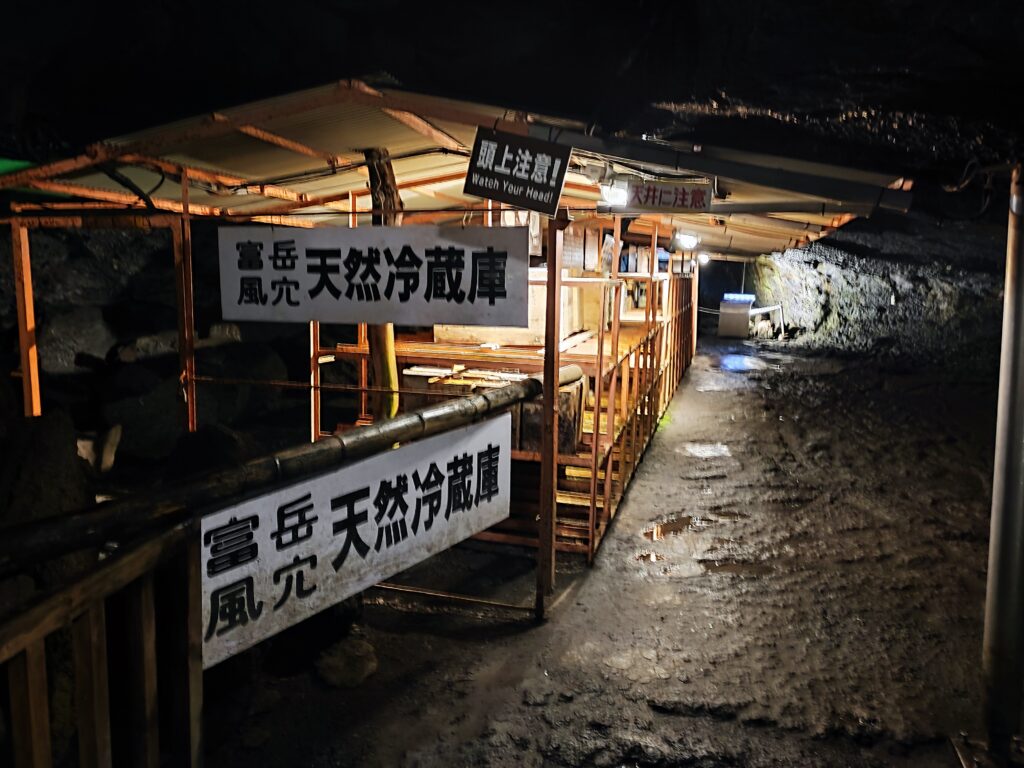
Why Is It Called the Wind Cave?
Fugaku Wind Cave gets its name from the cool air that naturally flows through the cave.
It’s not windy in the dramatic sense, but the cave has a naturally cool, refreshing airflow that gives it its name.
Which one should you choose?
If you have time, I’d honestly recommend visiting both. They’re located very close to each other, and seeing both really helps you appreciate how different Mt. Fuji’s lava caves can be.
That said, if I had to choose just one, I personally prefer Narusawa Ice Cave. It feels a bit more adventurous, a little more dramatic, and overall more memorable as an experience.
Fugaku Wind Cave is also fascinating, but Narusawa Ice Cave tends to leave a stronger impression for many travelers.
New articles
-
 She Said Yes! A Surprise Engagement Tour at Mt. Fuji
 -
Why Tap Water Tastes So Good in Fujiyoshida and Kawaguchiko | Mt. Fuji Water
-
Narusawa Ice Cave and Fugaku Wind Cave: Two Lava Caves near Mt. Fuji
-
Where Can I Take a Photo of Starbucks with Mt. Fuji? | The Best Starbucks for Mt. Fuji Photos: Access & Tips
-
Will Mt. Fuji Be Visible Today? Let me share Websites and Live Cams I check every day as a local (Mt. Fuji Forecast Checklist)